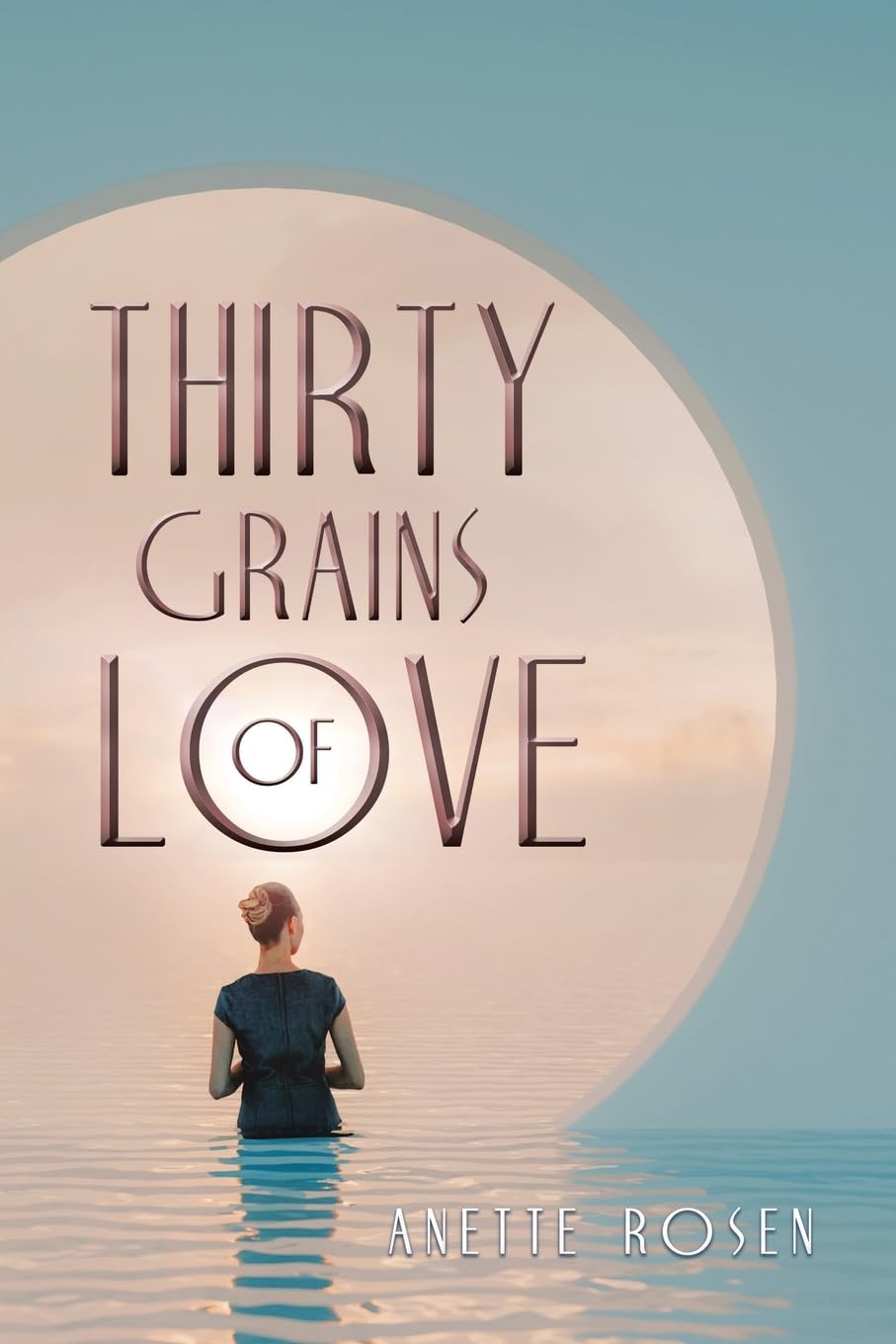
Title: Thirty Grains of Love
Author: Anette Rosen
Genre: Literary Fiction / Women’s Fiction
Thirty Grains of Love by Anette Rosen is a literary fiction novel exploring love, marriage, and friendship. The story follows Isabelle, an artist experiencing professional success and hardships within her personal life. As she faces financial problems, her husband’s court case and the disappearance of her best friend, readers follow her on a journey of family protection and discovering her own identity.
A key strength of the novel is how it explores relationships and the expectations placed on women. Through the characters of Isabella and her friends, Rosen examines differing approaches to marriage; from traditional family roles to open relationships and balancing careers with family responsibilities. This allows the reader to consider how personal choices can impact relationships and individual happiness and reflect on how these may be present in their own lives. Isabella’s journey reinforces this as she attempts to balance her responsibilities with her passion for painting. These experiences encourage readers to consider the possibility of pursuing personal ambitions without sacrificing important relationships.
Another key element of this novel is character development. The main characters are fundamental to exploring the topics of love and personal growth within the storyline. Isabella’s complicated relationship with Angel introduces tension into the narrative as she struggles with her feelings toward him while remaining connected to her husband, Chris.
Her friendship with Nina provides an emotional connection for Isabella, and this relationship allows the reader to better understand the motivations behind Isabella’s decisions. The supporting characters bring different perspectives on commitments and happiness, allowing the storyline to explore relationship dynamics more in-depth than just one single relationship. Their personal difficulties demonstrate further to the reader how different circumstances can challenge loyal friendships and marriages.
Another strength of this novel is the setting and descriptive language the author has used. Readers may feel a strong atmosphere created using vivid imagery of the architecture and neglected gardens, Rosen further uses detailed descriptions to reflect the characters’ emotions. This is reflected in Isabella’s identity as an artist, as visual details help connect the setting with her creative ambitions.
The novel’s structure allows these themes to develop easily across the characters and different periods of time. Moving between Isabella’s experiences in 2000 and 2001, as well as the historical timeline surrounding Axenia, allows the narrative to connect readers to the wider questions of identity, social expectations, and family history.
Due to the different perspectives presented in the narrative and the descriptive, philosophical language used, some readers may find this novel to be a slow read. Some passages may feel too heavy with descriptions and could have readers feeling disjointed from the storyline at times. However, the descriptive prose has been used cleverly to reflect the characters personalities and ambitions, and other readers may thoroughly enjoy the descriptive journey the novel takes them on.
Thirty Grains of Love combines relationships, family history, and personal ambition to examine what it means to find fulfillment at different stages of life. Readers who enjoy character-driven literary fiction about identity may find this novel engaging and a thought-provoking read.
This Editorial Review was written by the Book Review Directory staff. To receive a similarly honest, professional review for one of your own books, click here.

